Cart 0

 hydration quest

you are a Mighty river

Your Quest is to flow like a mighty river! In order for a river to be healthy, it must be continually fed with lots of nourishing water from a clean, unpolluted source.

Our bodies are NO different. In fact, the human body is about 60% water. Because of this, hydration is one of the most foundational practices that can make a massive difference in how we think, feel, and perform.


how will this quest benefit me?
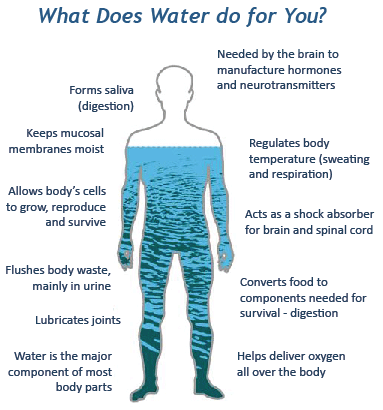
Proper hydration provides many proven life-changing benefits:

  • Improved Brain Performance

  • Improved Digestion

  • More Energy

  • Improved Weight Loss / Management

  • Decreased Joint Pain

  • Better Temperature Regulation

  • Prevent Kidney Stones

  • Improved Heart Function

  • Improved Detoxification and Waste Removal

  • Fewer Headaches


How to achieve This Quest:

STEP 1: To find how much water to start with, take your bodyweight in pounds, and divide that by 2. That is how much water you should drink, in ounces, per day. For example, if you weigh 150 lbs, you should consume 150/2 = 75 ounces of water per day.

STEP 2: This is the minimal amount of water that you should be drinking per day. Your Quest is to consume at least this much water on a daily basis, for the next 6 weeks. Record how much water you drink daily in your Quest Log.

If you live in a hotter climate, work outdoors, or are active throughout the day, the amount of water can be even higher.

Generally, an adult male needs about 3 liters (3.2 quarts) per day while an adult female needs about 2.2 liters (2.3 quarts) per day. All of the water a person needs does not have to come from drinking liquids, as about 20% of this water is contained in the food we eat.


Tips, Tricks, and FAQ


The Importance of water for resilience

To be Resilient is the ability to overcome and adapt to the stressors in our lives. Because we are 60% water, hydration plays a major role in our ability to adapt to extreme situations and environments. With adequate hydration, our bodies will perform better, feel energized, and become less prone to cramping or joint injury. Our digestive and cardiovascular systems can handle stress better, and our minds will feel sharp and ready for action.


 Daily Resets Quest

you were born to move

For our ancestors, daily survival required a variety of movements that kept them healthy, limber, and strong.

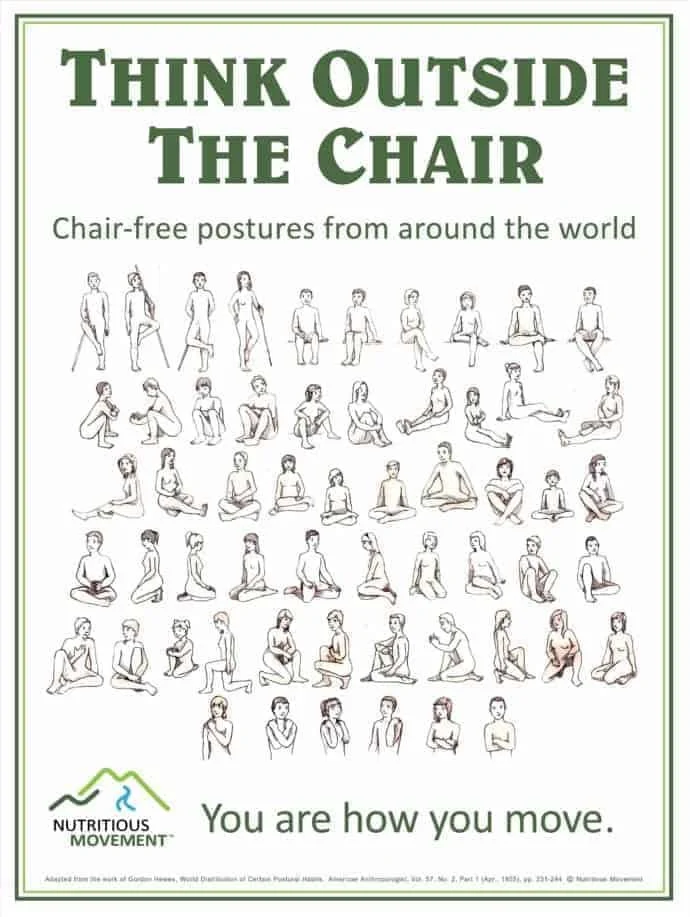
Before chairs, we humans would sit on the ground in positions that nourished our joints and massaged our muscles. We would forage for food by squatting close to the earth or climbing high into trees. We had to carry our own water, navigate challenging terrain, and craft our own clothing, tools, and shelter. This added up to a lot of physical activity per day!

Today, we are lucky to have the convenience of electricity, running water, and machines to do most of the work for us. Almost all of our work, travel, and entertainment involves sitting. The problem with this is that most of our biological systems have evolved over millennia to rely on diverse physical activities in order to function properly.

The World Health Organization has identified physical inactivity and sedentary behavior as a leading cause of disease and disability in the United States. When you have an inactive lifestyle:

  • Your immune system may not work as well.

  • You may have poorer blood circulation.

  • Your body may have more inflammation and pain.

  • You may develop a hormonal imbalance.

  • Your mood and energy levels decrease.

  • You burn fewer calories. This makes you more likely to gain weight.

  • You may lose muscle strength and endurance, because you are not using your muscles as much.

  • Your bones may get weaker and lose some mineral content.

  • Your posture degrades, which wears down your joints and exposes you to greater risk of injury.

  • Your metabolism may be affected, and your body may have more trouble breaking down fats and sugars.


how will this quest benefit me?

When many people think of fitness, they imagine activities that exert a lot of energy - like running, lifting weights, or playing sports. This kind of fitness is only one side of the equation! As much as we seek to expend energy, it is just as important that we devote some time each day to getting out of our chairs and nourishing our bodies with more restorative movement.

  • A strong, aligned posture improves our ability to breathe, move, and resist injuries.

  • Flexible joints improve our ability to move without pain, move more efficiently, and prevent injuries.

  • Ground movements and hanging expand our “vocabulary” of movement by freeing up our joints, armoring our shoulders, and teaching us how to feel comfortable in diverse positions.


How to achieve This Quest

Your Quest is to energize your day and undo the harmful effects of sedentary behavior by completing 6 Daily Resets. Requiring only an exercise band, a foam roller, and a comfy way to sit on the floor, these Resets are designed to fit seamlessly into your life, whether you do them at the office, while watching TV, or relaxing by the pool!

STEP 1: Complete at least 5 minutes of each Reset, daily. Click For Video Demonstration!

  1. Posture + Shoulder Health - Band Pull-A-Parts x 10 each: Palms Up, Palms Down, Up and Over, Hugs, Triceps

  2. Ground Movement - x 60 sec each: Rock, Bridge and Reach, Roll, Side Sit, Step Out, Get Up

  3. Upper Body Foam Rolling - Traps, Spine, Lats, Pecs, Snow Angel

  4. Lower Body Foam Rolling - Glutes, Hamstrings, Calves, Quad, Hip Flexor

  5. Flexibility - x 30 sec each: Band 3-Way Hamstring, Windmill, Side Sit, V Sit, Quad, Chest

  6. Deep Squat + Hang - Start with 1 min Deep Squat and a 10-30 sec hang. Build up to 5 min Squat and 60 sec Hang

For Weeks 1-2: Just focus on Resets 1 and 2

For Weeks 3-4: Focus on Resets 1-4

For Weeks 5-6: Strive to complete Resets 1-6 each day.

Step 2: Record your completed Resets in the Quest Log.


Tips, Tricks, and FAQ


The Importance of resets for resilience

Resilience is the ability to handle and adapt to stress in our lives. Like a well-tempered blade, our bodies must be able to flex and bend when it matters, without breaking. As medical research has proven, a sedentary lifestyle places a great deal of stress on our bodies, especially our joints and posture. This makes us more likely to experience pain and injuries when we are active.

These Resets ensure that our bodies are aligned, mobile, protected, and ready for action!


 Walking Quest

you are a Nomad

About 6 million years ago, our ancestors did something really cool. These early hominids descended from their forest havens, stood tall as they peered over the savanna grasses, and began walking on two legs!

By about 2 million years ago, Homo Erectus had seemingly mastered the art. Almost immediately upon showing up, our intrepid forebears expanded out from Africa and traveled by foot as far as Indonesia - becoming the most geographically widespread species of hominid after us, Homo sapiens. The rest, as they say, is history.

Today, as we stalk beneath the forest canopy, amble across the grassy plain, or even stroll through the supermarket, each step is an experience shared with a family that extends back aeons.

Walking is so deeply woven into what it means to be human. This ancient balancing act is something our bodies and souls crave. It nourishes us physically, mentally, and spiritually. It connects us to ourselves, our ancestors, and our Mother Earth.

It’s time to move!

“The world reveals itself to those who travel by foot.” - Werner Herzog


how will this quest benefit me?

Remember, we have been walking for 6 million years! It’s so freakin’ good for you!

Mental Benefits

  • Improved sleep

  • Improved energy

  • Improved mental alertness

  • Improved mood

  • Reduced stress

  • Reduced depression and anxiety

Physical Benefits

  • Increased cardiovascular and pulmonary (heart and lung) fitness

  • Reduced risk of heart disease and stroke

  • Improved management of conditions such as hypertension, high cholesterol, joint and muscular pain or stiffness, and diabetes

  • Stronger bones and improved balance

  • Increased muscle strength and endurance

  • Reduced body fat

  • Improved digestion

Spiritual Benefits

  • Improved libido

  • Improved creativity

  • Deepens nature connection

  • Encourages exploration

  • Encourages social activity


How to achieve This Quest:

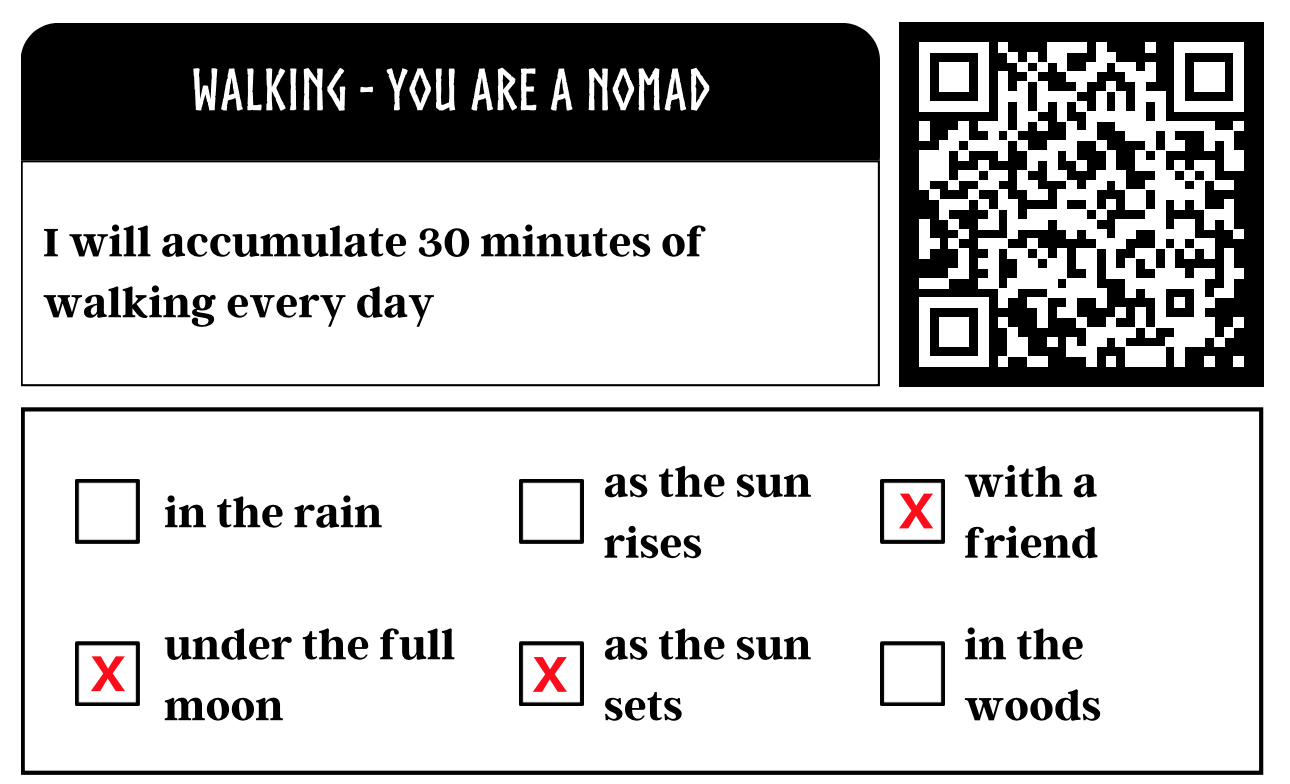
Your Quest is to accumulate 30 minutes of walking per day, 7 days per week. This can be done in as little as 3 x 10 minute segments throughout the day, or all at once.

STEP 1: Find a safe and engaging walking route that is accessible from your doorstep or place of work. Try to find a route that allows for at least 10 minutes of continuous walking.

Step 2: Walk at a brisk pace of about 3.0-4.5 miles per hour to receive the most benefits in health and longevity. This translates to a heart rate of about 120-140 bpm, or an intensity that passes the talk test.

Step 3: Throughout the 6 weeks, use walking as an experience to explore and connect with nature. Strive to walk under the following conditions:

  • As the sun sets

  • In the woods

  • With a friend

  • Somewhere new to you

  • Under the full moon

  • Under the new moon

  • In the rain

  • As the sun rises

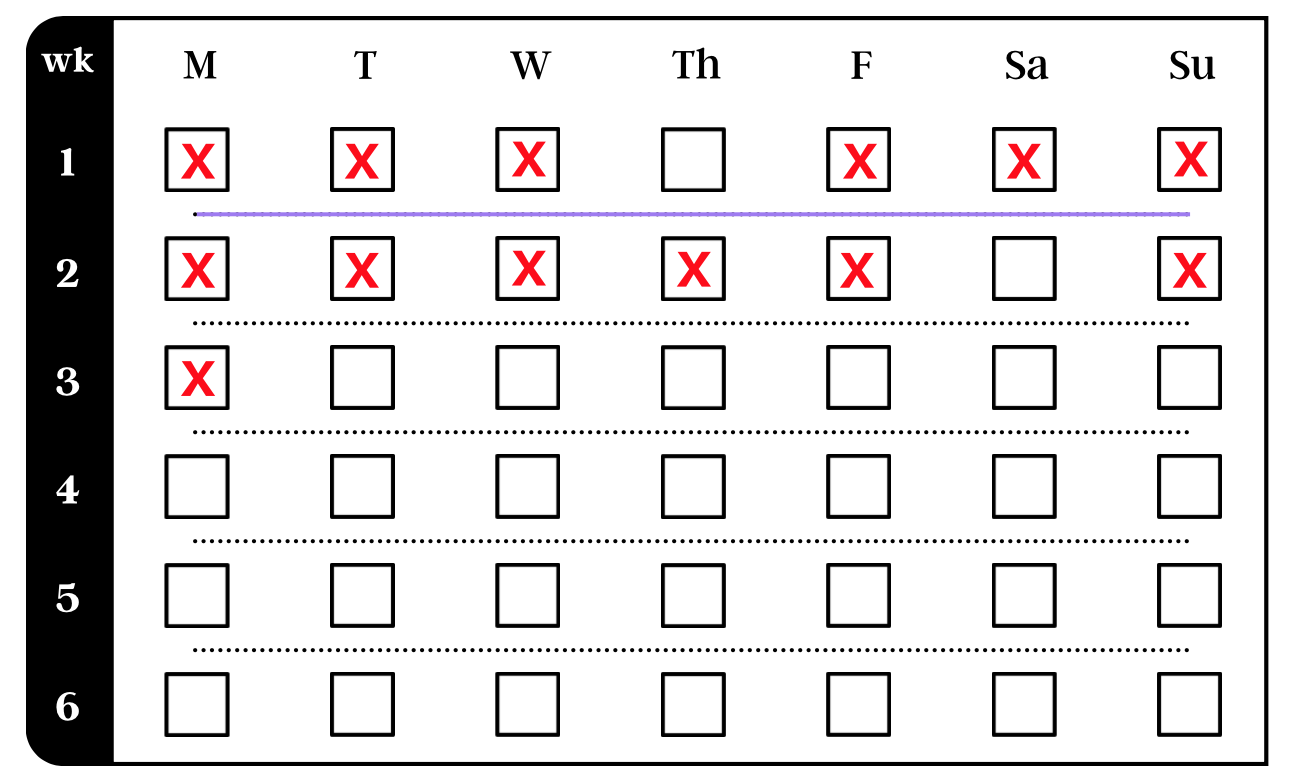
Step 4: Record your daily walking successes in the Quest Log


Tips, Tricks, and FAQ


The Importance of walking for resilience

To be Resilient is the ability to overcome and adapt to the stressors in our lives. Daily walking is one of the most health-boosting, stress-reducing, and resilience-building activities you can do. In as little as 10 minutes, you can fortify almost every system in your body, relieve the mind, and connect to a major part of what it means to live the human experience.


 Sleep quest

you are one with the sun

The cycles of light and dark that result from the movements of the sun, moon, and planets affect nearly all living creatures. For millennia, humans evolved to be intimately in tune with these cycles. Even long after we discovered the friend of fire, our physiology continued to dance to the rhythm of the sun.

These cycles guide what is called our Circadian Rhythm - the internal body-clock that orchestrates and synchronizes all of our body’s functions. The sun’s trajectory provides vital information to our brains that can have lasting effects on our health and longevity.

Today, we often get too little of the sun’s healing light in the morning, and too much artificial light at night. This has derailed our circadian rhythms and lead to an epidemic of sleep deprivation.

To make matters worse, we live in a time of unlimited distractions, endless stimulation, and a culture that believes you should “sleep when you’re dead!”

Sleep is so important that we spend a third of our lives doing it! During sleep is when the body is actively recovering itself: removing waste, dismantling old cells, building new tissue, and processing new memories. It is the number one process that determines our health, happiness, and resilience.


how will this quest benefit me?

Before we begin, answer these 3 questions:

  1. Do you wake up feeling refreshed almost every day?

  2. Do you wake up at the same time (within 30 minutes) every day without an alarm?

  3. Do you fall asleep almost every night within 30 minutes?

If you answered NO to any of these questions, you have the potential to significantly benefit from this Quest.

Adequate sleep provides many proven life-changing benefits:

  • Reduced risk of developing chronic diseases (such as type 2 diabetes)

  • Better memory

  • Increased life expectancy

  • Reduced risk of being overweight

  • Reduced stress levels

  • Reduced risk of developing Alzheimer’s

  • Increased energy

  • Improved concentration

  • Greater capacity to learn

  • Better ability to make healthy food choices

  • Improved immune system function

  • Enhanced autophagy (the breakdown of old, worn out cells)


How to achieve This Quest:

Your Quest is to explore 6 different lifestyle factors that are known to affect sleep quality and duration. Each week, we will focus on a different lifestyle factor, so that you can gradually build a sustainable sleep practice and identify which factors are most beneficial to you.

Although we will be experimenting with 6 different lifestyle factors, most people find that committing to 3 of the 6 factors is helpful enough to create a lasting improvement in sleep.

STEP 1: Refer to the Sleep Protocol below to identify which lifestyle factor to focus on each week.

STEP 2: Pick 1 or 2 practices from the current week’s lesson, and record these choices in your Quest Log.

STEP 3: Plan how you are going to incorporate each week’s lesson into your sleep routine, and implement the new practice daily.

STEP 4: Record in your Quest Log the days that you successfully implement each principle.


Sleep protocol

Adapted from the 4 pillar plan by dr rangan chatterjee


The Importance of sleep for resilience

To be Resilient is the ability to overcome and adapt to the stressors in our lives. Because sleep is so crucial to our health and wellbeing, it is the bedrock of Resilience. Sleep is literally the main process our bodies utilize to adapt and bounce back from stress. The consequences of sleep deprivation are systemic and potentially life-threatening, both in the short and long term.


 Stress Management Quest

you are here now

In the West, productivity and work defines us. Our identities are often our professions, and we measure success by financial wealth or climbing the career ladder. One of the first questions we ask a stranger is, “What do you do for work?” As sad as this is, it makes sense when “Americans work 137 more hours per year than Japanese workers, 260 more hours per year than British workers, and 499 more hours per year than French workers.”

In short, many of us are overworked, over stressed, and ignorant of the stress-relieving practices that can truly help us. Our material culture tries to sell us happiness in the form of more stuff. A nicer car, a bigger home, a new electronic gadget, 3000 channels and unlimited streaming in every room of the house! These things — hawked as symbols of success — insidiously add stress to our lives.

The burden of stress often leads to us desperately searching for some quick relief, usually in the form of low-effort, low-reward behaviors like excess screen time, sugary snacks, and other substances that end up contributing to our stress in the long term.

In an age where we can have everything, why are so many of us stressed and unhappy? And more importantly, what can we do about it?


how will this quest benefit me?

For this Quest, we will be exploring 3 states of being that are shown to reduce stress and promote a sense of wellbeing.

The state of Reflection will be built through a journaling practice.

The state of being Centered will be built through breath and mindfulness.

The state of Presence will be built through awareness and solitude.


How to achieve This Quest:

Your Quest is to complete the Stress Management Protocol, below.

Step 1: Each week, return to this page to read the associated lesson.

Step 2: Choose a practice from each lesson, and incorporate it into your daily routine for the full week. The idea is to gradually build these practices over the course of the 6 weeks.

Step 3: Track your progress and record your success in the Quest Log.


Stress Management Protocol


The Importance of Stress Management for resilience

The practices detailed in this Quest are proven ways to adapt to and overcome stressors in our lives. Think of this Quest as building your personal stress-management utility belt. Each tool has its own effectiveness, which is different for everyone. By familiarizing ourselves with these practices, we can identify which ones are worth carrying with us every day, and which can be saved for when the situation calls for it.


 Nutrition Quest 1

you are what you eat

Recent evidence shows that modern humans have been on the Earth for about 300,000 years. Our earliest examples of farming go back only 23,000 years.

For most of our existence (at least 277,000 years), humans have evolved on a primal diet. As omnivores, we would hunt wild meat and prize the organs, bone and muscle. The rest of our time was spent gathering nuts, leafy vegetables, and tubers.

At certain times throughout the year, we would briefly gorge on the delicious and sugary fruits that came and went with each season.

The advent of farming, the industrial revolution, the fast food craze, and the rise of processed foods have all gradually derailed the ancient and organic connection we all shared with the land and our food.


how will this quest benefit me?

This Quest hopes to guide your nutrition back to a place of ancestral harmony. Through this process, you will rely less on pre-packaged, processed and fast foods.

You will gain an understanding of your body’s unique needs regarding Macronutrients: proteins, carbohydrates, and fat.

The purpose of this Quest is not to tell you exactly what to eat, or to provide a very strict diet that is impossible to follow for long.

Rather, you will explore a series of nutritional principles and proven practices designed to optimize your health, strength, and longevity.

You will gradually make changes to your existing diet in a way that is sustainable, enjoyable, and ultimately up to you.


How to achieve This Quest:

Your Quest is to complete the Nutrition 1 Protocol, below.

Step 1: Each week, return to this page to read the associated lesson.

Step 2: Choose 1-2 practices from each lesson, and incorporate it into your daily routine for the full week.

The idea is to gradually build these practices over the course of the 6 weeks. Try to maintain the practices from previous weeks as you move through the Quest.

We want these changes to feel easy and fit seamlessly into your life.

Each week has many options to choose from - identify which practice seems the easiest or simplest to begin including into your routine, and go from there.

Step 3: Track your progress and record your success in the Quest Log.


Nutrition 1 Protocol


The Importance of Nutrition for resilience

The practices detailed in this Quest are proven ways to adapt to and overcome stressors in our lives. Think of this Quest as building your personal nutrition plan. By familiarizing ourselves with these principles and practices, we can identify which ones are worth carrying with us every day, and which can be saved for when the situation calls for it.